
Now Reading: Beyond the Block: The Complete Guide to Hypackel 2 and Lightweight Browser Gaming
-
01
Beyond the Block: The Complete Guide to Hypackel 2 and Lightweight Browser Gaming

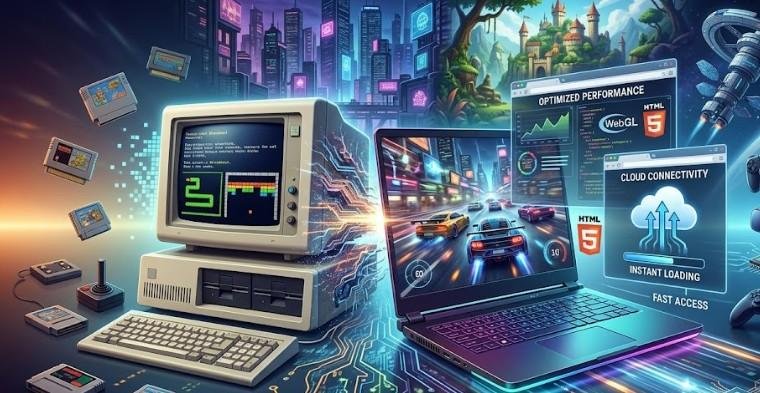
The rise of browser-based gaming mirror sites has reshaped how millions of students and office workers spend their downtime. Modern network filters block up to 90% of dedicated gaming portals, driving a massive migration toward lightweight static hosting.
Enter hypackel 2. This term describes the evolving generation of secondary deployments, custom mirrors, and sequel-heavy game libraries designed to run smoothly on restricted networks.
Instead of relying on heavy executable files or complex installations, these platforms leverage basic web technologies to deliver instant entertainment. Understanding how these sites function—and how to deploy your own static backup—offers a fascinating look into modern web architecture.
Why Lightweight Browser Platforms Exploded
Network administrators typically restrict traffic by using deep packet inspection and domain blacklists. According to research on internet infrastructure management from the Cybersecurity and Infrastructure Security Agency (CISA), static content delivery networks (CDNs) present unique challenges for traditional web filters because they blend in with standard educational and corporate traffic.
When a primary domain gets flagged, developers rarely give up. Instead, they spin up secondary nodes, lean on lightweight frameworks, and aggregate unblocked HTML5 titles.
This structural shift away from resource-heavy, monolithic gaming sites to decentralized static mirrors keeps simple web games accessible on modest hardware, such as basic Chromebooks.
Inside Hypackel 2: Key Features and Architecture
The transition to hypackel 2 reflects a move toward speed, minimalism, and resilience. The ecosystem relies on three distinct operational layers:
- Static File Delivery: Games run entirely inside the client’s browser using HTML5, WebGL, and JavaScript. No external server processing is required during gameplay.
- Decentralized Hosting: By distributing files across free repositories like GitHub Pages, the games remain active even if the main landing domain is taken offline.
- Repository Forking: Users can duplicate an entire library structure with a single click, creating independent access points that network filters haven’t cataloged.
Because these sites avoid heavy video streaming or massive downloads, they consume minimal bandwidth. This makes them ideal for environments operating under strict network caps.
Popular Titles Powering Secondary Game Catalogs
Sequels and physics-based titles dominate these secondary portals. Player engagement data across web arcades highlights a clear preference for games with simple controls and instant loading times.
| Game Title | Genre | Primary Mechanic | Performance Profile |
| Slope 2 | Physics Runner | 3D Ball Control | High WebGL graphics; requires hardware acceleration. |
| Riddle Transfer 2 | Point-and-Click | Puzzle Solving | Ultra-lightweight 2D graphics; runs on any browser. |
| Madalin Stunt Cars 2 | Driving Simulator | 3D Physics Engine | High memory usage; best on desktop browsers. |
| Boxing Physics 2 | Casual Brawler | One-Button Physics | Minimal CPU footprint; smooth on low-end laptops. |
| Geometry Dash 2 | Rhythm Platformer | Precision Timing | Low latency requirement; highly sensitive to frame drops. |
These titles rely heavily on lightweight canvas rendering. According to educational technology guidelines published by the U.S. Department of Education, modern browser standards like HTML5 allow interactive media to execute safely within isolated sandbox environments, keeping system resource demands low.
How to Deploy a Personal Static Mirror
If a primary hub is unavailable, building a private static mirror takes less than five minutes. This process utilizes standard developer tools to host a static site for free.
- Access the Source Repository: Navigate to a public static game repository on GitHub.
- Fork the Project: Click the “Fork” button in the upper-right corner to duplicate the codebase into your personal account.
- Configure Repository Settings: Open the settings tab of your newly created repository. Rename the repository to match the syntax YOURUSERNAME.github.io.
- Activate Pages Deployment: Locate the “Pages” section in the left sidebar. Set the deployment source branch to main or master and save your changes.
- Launch the Site: Within two minutes, your custom URL will live host the entire library under an independent domain.
Because this URL is unique to your personal account, standard domain-blocking lists will not flag it immediately.
Performance Checklist: Optimizing Browser Playback
Slow frame rates and lag usually stem from browser configuration issues rather than network speed. Use this quick troubleshooting framework to fix choppy performance:
- Enable Hardware Acceleration: Check your browser settings (chrome://settings/system) and toggle on “Use graphics acceleration when available.”
- Clear WebGL Cache: Stale canvas memory can cause stuttering in 3D titles like Madalin Stunt Cars 2.
- Disable Heavy Extensions: Ad blockers and script managers can accidentally intercept game assets during runtime.
- Monitor Tab Memory: Keep background tabs to a minimum. Chrome’s Memory Saver mode can suspend active game scripts if system RAM fills up.
Limitations, Misconceptions, and Network Rules
While static mirrors offer easy access, it helps to understand their technical limitations and network boundaries:
- Local Storage Dependencies: Most static titles save progress directly to the browser’s LocalStorage. Clearing your browsing history or switching devices will wipe saved game data.
- No Centralized Multiplayer: Games offering “multiplayer” on static mirrors often rely on peer-to-peer WebRTC connections or local split-screen modes rather than dedicated cloud servers.
- Acceptable Use Policies: Bypassing local filters using personal mirrors may violate school or corporate terms of service. Always review local network guidelines before hosting or accessing proxy domains.
Frequently Asked Questions
1. What is hypackel 2?
Hypackel 2 refers to secondary deployments, updated iterations, and mirror sites that host lightweight browser games, often used to access unblocked arcade titles on restricted networks.
2. How do I fix lag in browser physics games?
Enable hardware acceleration in your browser settings, close high-memory background tabs, and update your graphics drivers to ensure smooth WebGL rendering.
3. Will clearing my browser history delete my game saves?
Yes. Most browser games save progress directly to local browser storage. Clearing your cookies and site data will delete saved progress unless the game uses cloud saves.
4. Is it free to host a personal game mirror on GitHub?
Yes. GitHub Pages provides free static web hosting for public repositories, making it a popular option for building personal site backups.
The evolution of hypackel 2 highlights how web gaming adapts to network constraints through clever, lightweight architecture. By shifting from central servers to static CDN hosting and client-side HTML5 rendering, browser gaming remains fast, simple, and accessible.
Whether you are exploring physics puzzles like Slope 2 or deploying a personal mirror using GitHub Pages, understanding the underlying technology makes for a smoother experience. Keep your browser settings optimized, watch your memory usage, and enjoy seamless gameplay wherever you are.