
Now Reading: What Happened to StreamEast? The Real Story Behind the Shut Down
-
01
What Happened to StreamEast? The Real Story Behind the Shut Down

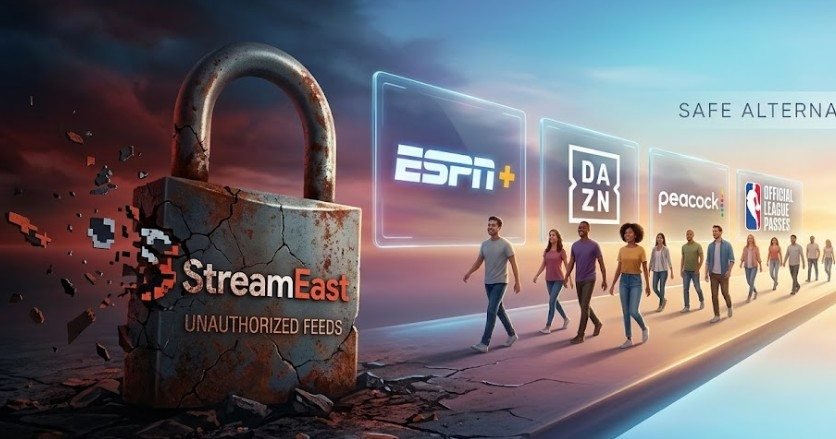
Before its dramatic takedown, StreamEast logged over 1.6 billion visits in a single year across 80 associated web domains. It was built into a digital empire so massive that it accounted for a major share of global unauthorized live sports viewing.
That empire unraveled in late August 2025 during a multi-agency sting operation led by Egyptian law enforcement and the Alliance for Creativity and Entertainment (ACE). Police raided physical locations near Cairo, seizing servers, phones, and bank cards connected to millions in ad revenue. By mid-2026, Egyptian courts handed down criminal sentences and steep fines to the operators, marking one of the biggest digital piracy busts in history.
Yet, if you type the name into a search bar today, dozens of matching links still pop up. Understanding why that happens—and what risks lurk behind those remaining links—requires a closer look at how modern web piracy works.
The Rise and Fall of the Sports Streaming Giant
StreamEast began as a simple link aggregator, pulling live video feeds from paid broadcasts and embedding them onto a sleek, user-friendly interface. While legacy streaming sites were clunky and filled with intrusive pop-ups, StreamEast mimicked the look of legitimate premium sports networks.
That clean interface fueled rapid adoption. Cord-cutters facing high subscription costs for NFL, NBA, MLB, and European soccer matches turned to the site in droves. According to anti-piracy estimates, the network averaged more than 136 million monthly visits at its peak.
[ Broadcast Source ] —> [ StreamEast Capture ] —> [ 80+ Web Domains ] —> [ 136M Monthly Users ]
The scale of the operation eventually drew global scrutiny. Investigations revealed a web of offshore shell companies used to funnel advertising revenue into foreign bank accounts and cryptocurrency wallets. When law enforcement finally moved in, the physical operation required just a handful of laptops and mobile phones to run a multi-million-dollar global network.
Current Status: Domain Seizures vs. The Clone Network
When ACE and international authorities seized StreamEast’s primary infrastructure, they redirected traffic to official copyright education portals. However, the brand hasn’t vanished entirely from the internet.
Navigating the current online landscape requires recognizing three key distinctions:
Primary Domains Are Gone
The original web infrastructure hosted by the core operators remains completely offline or points directly to law enforcement landing pages.
Unverified Mirror Sites Have Surged
Dozens of independent third parties copied the platform’s visual design and launched lookalike domains to siphon residual search traffic. These mirror sites carry no connection to the original project and often harbor security hazards.
App Store Lookalikes Are Different Tools
Mobile storefronts like Google Play host several apps carrying similar names. These are legal companion tools designed for score updates, team rosters, and game schedules rather than live video feeds.
Security Risks Behind Mirror Sites
Visiting unauthorized streaming mirrors exposes your devices and personal data to significant cybersecurity risks. Because these clone sites operate outside standard web regulations, their monetization strategies rely on aggressive tactics.
| Threat Type | How It Works | Potential Impact |
| Drive-By Malvertising | Invisible ad overlays trigger automated background downloads. | Malware infections, keyloggers, and system corruption. |
| Phishing Redirects | Pop-ups mimic system warnings or subscription login pages. | Credential theft and personal identity exposure. |
| Session Hijacking | Unencrypted connections capture browser cookies and tokens. | Compromised social accounts and banking details. |
Cybersecurity research highlights that non-compliant streaming portals are among the top distributors of consumer browser exploits. Without official oversight, using clone platforms exposes your personal information to unnecessary vulnerabilities.
Evaluating Live Stream Security
If you land on a web platform offering free live broadcasts, use this safety checklist to evaluate whether the site poses a security risk:
- SSL Security Certificate: Look for https:// in the URL bar, though note that modern phishing sites can also obtain basic certificates.
- Aggressive Redirect Traps: Does clicking anywhere on the screen open multiple unprompted browser tabs?
- Executable Download Prompts: Does the site ask you to install a custom “media player” or browser extension to view the video?
- Unrealistic Account Requests: Are you prompted to enter credit card details to verify your age for a “free” stream?
- Brand Identity Spoofing: Does the domain name use subtle misspellings or unusual top-level extensions (like .top, .tk, or .cc)?
If a site checks two or more of these warning boxes, close the tab immediately.
Finding Reliable Alternatives for Live Sports
Navigating fragmented sports broadcasting rights can be frustrating, but accessing content through legitimate providers guarantees high-definition streams, zero malware risks, and consistent platform stability.
+–> Free Tier: Over-The-Air (OTA) HD Antenna
|
[ Sports Viewer ] +–> Specialty Tier: Standalone League Passes
|
+–> Regional Tier: Local Network Apps & FAST Services
Over-the-Air (OTA) Broadcasts
A simple digital antenna gives you free access to local network broadcasts (such as CBS, FOX, NBC, and ABC) in uncompressed high definition. Major games, including the Super Bowl and regional rivalries, air free over public airwaves.
Regional Sports Networks (RSNs) & League Passes
Most major sports organizations—including the NFL, NBA, MLB, and NHL—offer direct-to-consumer digital passes. Many regional networks now allow fans to subscribe directly to local team feeds without requiring a traditional cable package.
Ad-Supported Streaming Platforms
Free Ad-Supported TV (FAST) services frequently stream live sports coverage, highlights, tactical analysis, and classic games at no cost.
To explore legal digital resources, official intellectual property guidelines, and consumer internet protections, review published guidance from the U.S. Department of Justice and educational materials provided by the Federal Trade Commission.
Frequently Asked Questions
1. Is StreamEast still working?
No. The original network was officially shut down following an international law enforcement operation. Current sites using the name are unverified clone mirrors.
2. Why do so many clone websites exist?
Third-party operators create mirror sites to capture residual search traffic, using the recognized name to drive ad impressions and malvertising revenue.
3. Are StreamEast apps on app stores legal?
Yes. Apps using similar names on official stores are legal score-tracking tools and schedule planners, not live video streaming platforms.
4. What are the main risks of using mirror sites?
Mirror sites often host drive-by malware downloads, aggressive pop-up redirects, and malicious advertising networks designed to steal user data.
Conclusion
The shutdown of StreamEast marked a turning point in how law enforcement agencies and rights holders tackle global digital piracy. While lookalike mirror sites still attempt to capitalize on the platform’s legacy, using them poses genuine security threats to your devices and private data.
As live broadcasting shifts toward direct-to-consumer digital channels, choosing legitimate options—from over-the-air antennas to specialized streaming tiers—remains the safest way to enjoy game day without compromising your online privacy.