Now Reading: 866-201-0856 Is This a Real Nelnet Call or a Student Loan Scam
-
01
866-201-0856 Is This a Real Nelnet Call or a Student Loan Scam

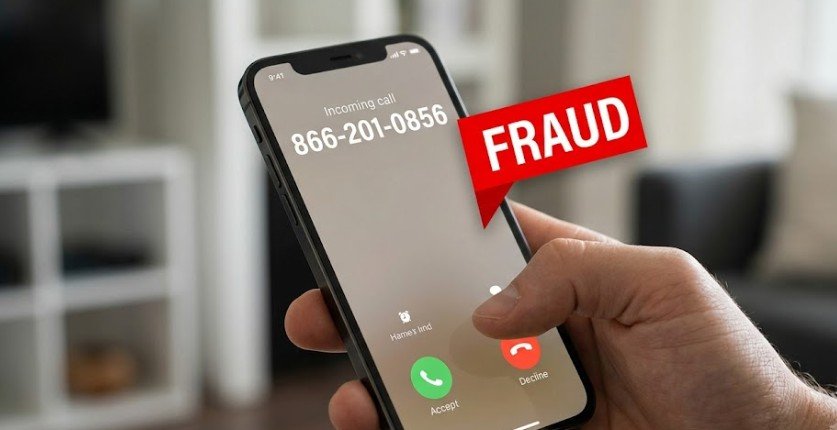
A phone call can look official without being trustworthy. That is the key thing to know about 866-201-0856, a toll-free number repeatedly associated online with automated student-loan messages claiming to involve Nelnet and the U.S. Department of Education.
Some recipients report routine servicing language. Others say they had no student loans, or that the caller asked for sensitive information. Because caller ID can be spoofed, the safest question is not “Does this number look legitimate?” but “Can I verify the message through an official channel?”
What People Are Reporting About 866-201-0856
Public caller-reporting services show a consistent theme: calls tied to student loans, Nelnet, repayment, or missing account information. RoboKiller, YouMail, and reverse-phone databases include reports describing prerecorded messages that tell borrowers to update details, return a call, or log in to a Nelnet-related account. Some reports classify the calls as legitimate servicing; others label them spam or fraud.
That mixed record matters. Crowd-sourced phone databases can show patterns, but they cannot prove who placed the call you received.
Official federal information gives a better verification point. Federal Student Aid currently lists Nelnet as an authorized federal student-loan servicer and gives 1-888-486-4722 as Nelnet’s borrower-support number. Nelnet materials use the same number.
This does not prove every call displaying another number is fake. Large organizations may use outbound systems or contractors. It does mean you should not treat incoming caller ID as proof of identity.
Why a Real-Sounding Student Loan Call Can Still Be Risky
Student-loan scams work because the subject already feels urgent. Borrowers may be worried about repayment dates, changing plans, missed payments, loan transfers, or forgiveness rules. A caller who mentions one of those topics can sound believable before proving anything.
The Federal Trade Commission reported more than one million imposter-scam reports in 2025, with consumers reporting over $3.5 billion in losses.
That is why an official-sounding company name should never replace basic verification. A convincing caller may know enough public or previously exposed information to make the conversation sound personal.
What the Reported Calls Usually Say
Several reported messages linked to this number follow a similar script. They may say Nelnet is calling on behalf of the Department of Education, mention repayment or account servicing, and ask the recipient to update contact information or respond to an automated message.
Those details are not automatically suspicious. Federal Student Aid says loan servicers may contact borrowers about account issues.
The concern begins when the caller asks you to prove your identity with sensitive information during an inbound call. Federal Student Aid specifically warns that the Department of Education and its partners will never ask for your StudentAid.gov username and password.
If a caller asks for an FSA ID password, bank login, full Social Security number, or an immediate fee for loan relief, end the call.
A Five-Step Test Before You Call Back
Use this process whenever a student-loan call feels questionable.
- Do not press buttons or give personal details. Save the voicemail and note the time, number, and caller name.
- Open your loan account independently. Do not use a caller-provided link. Go to the official Federal Student Aid dashboard and check your servicer, balance, repayment status, and notices. Federal Student Aid account and loan information
- Compare the claim with your account. If the voicemail says your mailing address is missing, check whether your profile actually shows a problem.
- Contact the servicer through the phone number shown on StudentAid.gov or its official website. For Nelnet, Federal Student Aid currently lists 1-888-486-4722. Ask whether the organization tried to reach you.
- If the call appears fraudulent or unwanted, block the number and report it. The FCC accepts complaints involving unwanted calls and caller-ID spoofing. FCC unwanted call and spoofing complaint guidance
This works because it separates the message from the caller. A scammer can imitate a voicemail, but your official account gives you an independent reference point.
What If You Really Are a Nelnet Borrower?
Do not assume every unexpected call is fake. Nelnet is an official federal loan servicer, and borrowers may receive legitimate account communications. Federal Student Aid lists Nelnet among the companies contracted to service federal loans.
The smart response is verification, not panic. If the message matches a real issue in your account and Nelnet confirms the outreach when you contact its published support line, you can handle the issue normally.
The same approach works whether the message concerns repayment, an overdue balance, contact information, or a recent loan transfer. You do not lose anything by verifying first.
Why Caller ID Is Not Enough
A toll-free number can look corporate, but it is not proof of ownership. A familiar company name on the screen is not proof either. The FCC recognizes caller-ID spoofing as a real consumer-protection problem.
Spoofing allows the displayed number or caller name to differ from the actual source of the call. That means even a number you recognize should not automatically earn your trust when the caller wants sensitive information.
Complaint databases have limits too. They can reveal patterns, but user reports may be incomplete, mistaken, or based on spoofed calls. Use them as warning signals, then verify through official records.
Frequently Asked Questions
1. Is 866-201-0856 definitely a scam number?
No. Public reports are mixed, and caller ID can be spoofed. Avoid relying on the number alone and verify any loan issue through StudentAid.gov or Nelnet’s published contact information.
2. What number should I use to contact Nelnet?
Federal Student Aid currently lists Nelnet’s federal student-loan servicing number as 1-888-486-4722. Use the number shown on your official account or the Federal Student Aid website.
3. Should I give my Social Security number to a student-loan caller?
Avoid giving sensitive information to an unexpected inbound caller. End the call and contact your loan servicer through an official number you found independently.
4. What if I already shared my FSA ID?
Change your StudentAid.gov password, review your account details for unauthorized changes, and report suspicious activity through official federal channels.
Final Take
The safest way to handle 866-201-0856 is to treat the call as unverified until you confirm the message yourself. The number has been associated with Nelnet-style student-loan outreach, but public reports are inconsistent, and spoofing makes caller ID unreliable. Check your Federal Student Aid dashboard, compare the message with your real account, and contact Nelnet through its officially published number rather than trusting an incoming call.
If the caller pressures you for passwords, payment, or sensitive identity details, stop the conversation. A legitimate loan problem will still be there after you verify it; a scammer’s advantage usually disappears when you do.